
Underwater pelletizer die plates
Die plates used with underwater cutting chambers, where molten strands emerge at the die face and are cut in circulating process water.
Replacement die plates for underwater and die-face pelletizing systems, selected for machine fit, polymer processing requirements and consistent pellet formation.
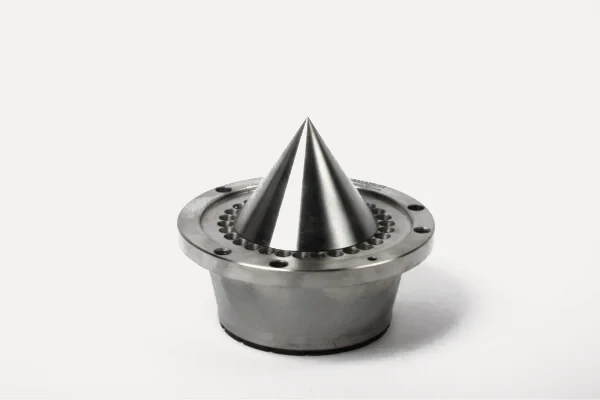
In pelletizing equipment, the die plate directs molten polymer through a defined hole pattern before it is cut into pellets. Plate geometry, cutting-face condition and thermal stability all influence process consistency.
Technoplast Solutions supplies aftermarket die plates for plastic recycling, polymer compounding and masterbatch production, with replacement configurations reviewed against equipment details, dimensions and technical drawings.
REQUEST A QUOTE ↗The correct design depends on the cutting arrangement, melt flow path and machine interface.
Die plates used with underwater cutting chambers, where molten strands emerge at the die face and are cut in circulating process water.
Machined extrusion plates for applicable hot-face or die-face cutting arrangements, with hole layouts suited to the machine configuration.
Cutting-face configurations may incorporate hardened surfaces, nitriding, coatings or wear-resistant inserts depending on the application and verified design.
Replacement plates can be reviewed against an existing sample, OEM part reference or dimensional drawing, including hole count and mounting geometry.
Small differences in the plate can affect installation, melt distribution and pellet quality.
Final material grade, surface treatment and insert configuration depend on the equipment model and confirmed technical requirements.
A properly matched die plate works together with the cutter assembly to support stable pelletizing.
Hole diameter, distribution and cutting-face condition influence pellet dimensions and consistency.
Continuous knife contact can wear the face over time. Surface condition should be assessed together with knife condition and setup.
Glass-filled, mineral-filled and other abrasive formulations may require attention to cutting-face wear resistance.
Accurate mounting and appropriate die construction are important in high-temperature, pressurized melt processing environments.
Technoplast Solutions welcomes aftermarket die plate enquiries for equipment associated with manufacturers such as:
These names identify equipment for replacement-part enquiries. Availability and fit are verified by model and part specification. Technoplast Solutions Inc. is an independent aftermarket supplier and is not affiliated with or endorsed by these equipment manufacturers.
Share the following details for an accurate technical review and quotation.
Die plates are used across multiple plastics processing operations.
Pellet production for compounded resins containing additives, fillers and reinforcement.
Die plates for color and additive concentrate pelletizing systems.
Replacement die plates in recycled polymer pelletizing and reprocessing lines.
Applicable underwater or die-face cutting equipment used in polymer pellet production.
Send the machine model, die plate dimensions, existing part reference or drawing, and required quantity.
Include photographs of the existing die plate and cutting face, hole pattern, mounting details and polymer application whenever available.
REQUEST A QUOTE ↗← Back to product catalogue